
The NCLEX-RN is the exam that registered nurses must pass to get their nursing license in the United States. State boards of nursing use this test to determine if candidates are ready for basic and advanced nursing practice. Passing the NCLEX-RN is an important step in obtaining a nursing license. It tests nurses on what they know and their skills to provide safe and effective care. Candidates who pass this exam can show that they meet high standards in nursing practice.
What is the NCLEX-RN exam?
The NCLEX-RN examination is a computer-adaptive test (CAT). It’s specially designed to assess the knowledge and skills of nurses in their field. The exam uses advanced algorithms to change the difficulty of questions based on how the candidate answered before. This approach effectively measures the candidates’ critical thinking and decision-making skills (ANA, 2024).
The NCLEX-RN exam tests your knowledge in four main areas:
- Physiological Integrity
- Safe and Effective Care Environment
- Health Promotion and Maintenance
- Psychosocial Integrity
These all are the client needs categories (NCSBN, 2023).
To succeed in this exam, you need a clear and organized study plan. Key areas of focus usually include basic nursing skills, medicine and drug knowledge, care for adult patients, child nursing, women’s health, and childbirth, among others. This plan will help you build a strong understanding of basic nursing principles. It shows how important practical skills are in nursing. Overall, the exam evaluates how well candidates can use their knowledge in different clinical situations (NCSBN, 2023).
Why Clinical Knowledge Matters in the NCLEX-RN Exam
The NCLEX-RN exam checks a candidate’s clinical knowledge. It evaluates how well candidates understand and apply medical and nursing concepts in real healthcare settings. The exam tests important areas like client care, pharmacology, physiology, and pathophysiology. You can learn theoretical knowledge mainly from textbooks and lectures. However, you gain clinical knowledge through hands-on experience in real-life clinical settings.

The NCLEX-RN exam tests candidates on their clinical knowledge using different types of questions. These include multiple-choice, fill-in-the-blank, drug calculations, ordered responses, and hot spot questions. The goal is to assess candidates’ abilities to make good decisions in different healthcare situations based on their practical clinical skills (PassportUSA, 2023).
Candidates may be asked to choose the best nursing care for a client with a specific health issue or to decide which clients should receive care first when they have different needs. The exam tests not just what candidates remember about clinical facts, but also how well they understand how to use these facts in real-life situations.
Doing well on the NCLEX-RN exam requires a strong understanding of clinical knowledge. Without this knowledge, candidates may struggle to answer questions correctly during the test. Therefore, nursing students should focus on their classroom learning and hands-on experience in clinical settings. This preparation helps them show that they are ready to provide safe and effective care for clients.
How to Develop Clinical Knowledge for the NCLEX-RN Exam?
To prepare effectively for the NCLEX-RN exam, you need a clear and organized plan. Focus on understanding nursing principles, improving your critical thinking skills, and applying what you’ve learned in practice. Here is a simple guide to help you build your clinical knowledge and get ready for the exam:
1. Understand the NCLEX-RN Exam Format
The NCLEX-RN is a test that adapts to your answers, so it’s important to understand how it works. The exam includes different types of questions: multiple-choice, select-all-that-apply (SATA), drag-and-drop, and case studies. It covers four main areas: Safe and Effective Care Environment, Health Promotion and Maintenance, Psychosocial Integrity, and Physiological Integrity. Knowing these areas well will help you study effectively (UWorld Nursing).
2. Build a Strong Clinical Knowledge Base
To build a strong foundation in clinical knowledge, candidates should use reliable NCLEX-RN review materials like Saunders, Kaplan, and UWorld. The NCSBN NCLEX Test Plan offers a helpful outline that covers all important topics. Additionally, studying nursing textbooks, taking part in online lectures, and using educational platforms can also improve understanding and retention of the material (NCSBN, 2023).
3. Develop Your Critical Thinking & Clinical Judgment
Using memorization is important, but developing critical thinking skills is essential in nursing. This helps students think clearly and make better choices. To improve decision-making, practice with NCLEX-style questions and understand the reasons behind each answer. It’s also crucial to focus on prioritization and delegation. Many questions will test your ability to decide which patients need immediate care and which tasks can be assigned to nursing assistants or LPNs.
4. Focus on Key Nursing Content Areas
Focus on key content areas to prepare for a nursing exam. In pharmacology, understand common drug classes, how they work, their side effects, and the nursing actions needed. Pay special attention to high-alert medications like insulin, anticoagulants, and opioids. In medical-surgical nursing, you should know the common diseases, how they affect the body, and the best nursing care strategies. Important topics include heart failure, diabetes, stroke, and breathing problems.
When studying pediatrics and maternity care, learn about developmental stages, common pediatric conditions, and obstetric practices such as labor stages and fetal monitoring. Understand mental health nursing concepts, like effective communication and giving psychotropic medications. Additionally, knowing laboratory values and how to read EKGs is essential, as you will need to identify changes in lab results or heart rhythms in the real exam.
5. Use NCLEX Practice Question Banks
Using NCLEX practice question banks like UWorld, Kaplan, or Archer Review can greatly help candidates prepare for the exam. Take timed quizzes and full-length practice tests to check how ready you are. Also, make sure to go over any wrong answers to avoid making the same mistakes again.
6. Learn Test-Taking Strategies
To improve your test-taking skills, focus on helpful test-taking strategies like eliminating wrong answers and using established frameworks such as Maslow’s hierarchy of needs or the ABCs (Airway, Breathing, and Circulation). These test-taking strategies can lead to better results. Also, look out for distractors in the questions and concentrate on the main issue being tested in questions to improve your accuracy (Silvestri & Silvestri, 2023).
7. Stay Consistent & Manage Stress
Establish a steady study schedule over four to six weeks, having a clear plan in place. It’s also crucial to manage stress by taking regular breaks, exercising, and getting enough sleep to perform your best on exam day.
8. Join Study Groups & Ask for Help
Join study groups or ask nursing instructors for help to support your preparation. Talk with other nursing graduates about key topics like client safety, prioritization, delegation, and emergency response for better understanding. Participate in online NCLEX communities on Facebook, Twitter, or WhatsApp to gain useful insights and clarify complex subjects. Keep up-to-date on changes to the NCLEX, including the new Next-Gen NCLEX (NGN) case studies and clinical judgment questions, so your preparation matches the current exam format.
How to Develop Practical Clinical Skills for the NCLEX-RN Exam?
In the NCLEX-RN exam, practical clinical skills include important abilities needed for nursing practice, such as how to assess clients, administer medications, and think critically. These skills are crucial for ensuring client safety and providing quality care. The NCLEX-RN exam evaluates a nurse’s ability to use knowledge in real-world situations. It’s important to go beyond just learning theory and focus on practical skills. Here are some test-taking strategies nurses can use to improve their practical clinical skills:
1. Gain Hands-On Clinical Experience
Consistent practice is the key to developing practical clinical skills. Clinical rotations give nurses valuable chances to learn from different experiences. By actively engaging in client care and asking questions during these placements, nurses can become more reflective on their practices. Watching experienced nurses and trying to understand the reasons behind their actions, supported by evidence-based practice, can greatly improve their knowledge and performance in nursing.
2. Use Structured Approach to Strengthen Your Critical Thinking & Clinical Judgment
Understanding frameworks like the Nursing Process (Assessment, Diagnosis, Planning, Implementation, and Evaluation); Maslow’s Hierarchy of Needs; NANDA nursing diagnoses; and the ABCs (Airway, Breathing, and Circulation) is crucial for making informed decisions in clinical practice and exams. These frameworks help create a clear approach that improves client care and clinical reasoning.
3. Improve Your Time Management & Prioritization Skills
Good time management in clinical practice helps nurses provide better care to their clients. These skills are also important for success on the NCLEX exam. Nurses need to prioritize tasks, manage multiple clients at the same time, and delegate responsibilities effectively. These abilities are key parts of the NCLEX-RN exam. Using integrated concept maps can help nurses manage their time and prioritize client care, especially when clients have multiple needs. It’s also helpful to review real-world nursing case studies and discuss care priorities with colleagues or educators (ANA, 2023).
4. Develop Effective Communication Skills
Effective communication and teamwork are essential components of nursing care and are often tested in the NCLEX-RN Exam. Therapeutic communication is vital when speaking to clients who are emotionally distressed, confused, or going through mental health crises. To improve communication skills, focus on client teaching, use techniques to calm people down, and practice active listening. These strategies can greatly enhance client interactions and lead to better healthcare outcomes.
5. Improve Your Technical & Safety Skills
Having strong technical skills is very important in healthcare. This includes giving intravenous, oral, and intramuscular medications, as well as knowing about possible drug interactions. It’s essential to review aseptic techniques, practice good hand hygiene, and follow infection prevention guidelines to maintain best practices. Furthermore, understanding safe client handling, how to prevent falls, and how to respond to emergencies can greatly increase confidence and effectiveness in clinical settings.
Strategic Approach to Utilize Bloom’s Revised Taxonomy in NCLEX-RN Exam Preparation
Bloom’s Revised Taxonomy is a useful guide for creating learning goals based on different levels of complexity. It can greatly improve the preparation for the NCLEX-RN exam. Educators often use this taxonomy to design courses, create tests, and assess student learning. By applying Bloom’s Revised Taxonomy to the NCLEX-RN exam and study programs, nursing students can better understand essential concepts and improve their critical thinking and decision-making skills (ANA, 2023).
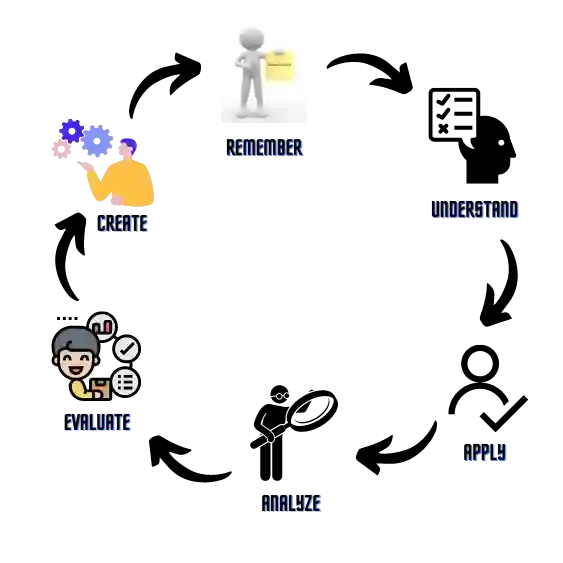
The Bloom’s Revised Taxonomy has six levels: Remember, Understand, Apply, Analyze, Evaluate, and Create. When practice questions match these levels, students can enhance their knowledge retention and problem-solving skills. The following components are key to the Bloom’s Revised Taxonomy:
1. Remember (Basic Recall of Information)
The “Remember” level emphasizes the need to recall basic information. This skill is crucial for nursing professionals because it involves memorizing important details like standard lab values, drug categories, common diseases, and basic procedures. To help remember this basic information, nursing students should use tools like flashcards, mnemonics, and spaced repetition techniques.
2. Understand (Comprehension of Concepts)
The “Understand” level involves grasping information and explaining it in your own words. It focuses on moving beyond memorization to understand the key ideas and how they work. Nursing students should use active learning methods, like making diagrams, flowcharts, and mind maps, to better understand concepts and their connections.
Confusing questions can make it hard to grasp ideas fully. To tackle these challenges, break down complex information into smaller parts and focus on key terms. For example, if a nurse sees that the client’s peripheral site is edematous, pale, and cool, the nurse must prioritize which action to take first.
- Aspirate and check for blood return.
- Gently apply a warm compress on the I.V. site.
- Measure the swollen site.
- Remove the IV line.
Nursing Tip
While all these options may seem relevant, focus on the keyword “first” to prioritize client care. The terms “edematous, pale, and cool” signify an accumulation of intravenous fluid in the surrounding tissue, known as infiltration. Now recall the harmful effects of infiltration in your mind and how to prevent it. In this situation, removing the IV line is the first action to protect the client from further harm. After that, you can measure the affected area and apply a warm compress.
3. Apply (Using Knowledge in Clinical Scenarios)
The “Application” level focuses on using knowledge gained in clinical situations. This stage challenges you to apply what you have learned in practice. For example, you need to decide which nursing intervention to take first when a client has shortness of breath or the right medication for a specific health issue. Developing psychomotor skills is vital for good performance and client outcomes. The nursing process is a key tool for carrying out any actions for the client. Secondly, using a concept map can help manage critical situations. It is important to think conceptually before making any choices on the NCLEX exam.
Consider a situation with a 45-year-old male client in the high-dependency unit (HDU), who is one day post-surgery after a distal gastrectomy. He shows several clinical indications, including a surgical wound, an abdominal drain, a Foley catheter, a nasogastric tube (NGT), IV lines, ineffective cough, rapid breathing, and discomfort shown by a pain score of 5/10 on the Numeric Rating Scale (NRS). Other observations include a fall risk score of 7/13 on the Fall Risk Assessment Tool (FRAT), oxygen saturation of 94%, temperature of 36.4°C, heart rate of 101 beats per minute, and blood pressure of 155/90 mmHg.
Nursing Tip
In these cases, nurses need to create a strategic plan with a clear rationale. The focus should be on helping the client improve their cough, normalize their breathing, and ease their pain. A holistic approach is necessary because one action can benefit multiple aspects of the client’s condition. For example, giving pain medication can reduce pain, ease restlessness, lower the heart rate, and lessen grimacing. This, in turn, helps the client cough effectively and improves their breathing.
4. Analyze (Break down Complex Situations)
This stage involves breaking down complex clinical situations to understand how different parts interact. It looks at not just what is happening but also why these factors affect the overall clinical picture. Nurses should frequently ask questions like “Why?” and “What if?”
This analysis needs a solid understanding of the pathophysiology behind patient conditions. It also requires the ability to spot patterns in patient data. Practicing prioritization and delegation in NCLEX practice exams is useful because it helps recognize the most urgent needs in various situations. Your analysis should be specific and concise, identifying both direct and indirect relationships. For example, effective pain management can improve a patient’s ability to cough, which lowers the risk of aspiration. To explain these ideas, let’s create a concept map.
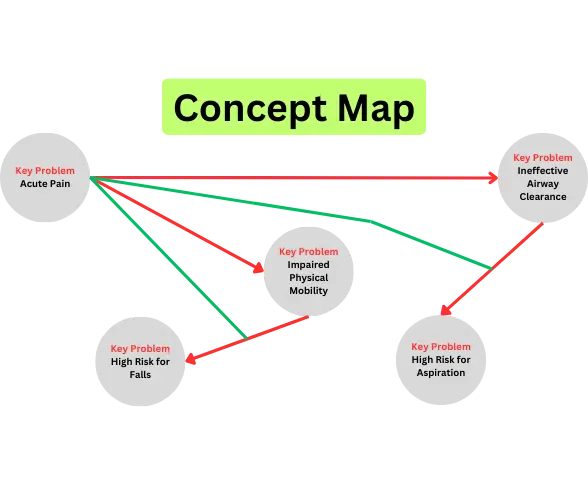
The red arrows show direct relationships with the main concerns, while the green arrows indicate indirect relationships. Good pain management can greatly affect a patient’s physical mobility if they feel discomfort with movement. This pain can make them hesitant to cough effectively, increasing the risk of aspiration. By relieving the patient’s pain, you can improve their coughing and deep breathing.
5. Evaluate (Making Clinical Judgments)
The “Evaluate” level involves making clinical judgments based on analysis. Healthcare professionals assess different situations, analyze the evidence, and make informed decisions to prioritize care for their clients. An example of this level is found in NCLEX questions that require Select-All-That-Apply (SATA) responses. These questions need to be analyzed using multiple interventions to choose the most suitable ones. For example, when caring for a client in septic shock, which actions are critical to stabilize the client?
Consider a client with pneumonia who shows signs of agitation, confusion, and restlessness. He has a low blood pressure reading of 90/60 mmHg and decreased urine output, putting him at risk of shock. With this information, how does a nurse determine which stage of shock the client is experiencing?
- Stage 1
- Stage 2
- Stage 3
- Stage 4
In the initial stage of septic shock, symptoms include a fast heart rate, pale and cool skin, and restlessness.
As the shock progresses to stage 2, the systolic blood pressure drops below 100 mmHg, cardiac output reduces to 4 to 6 liters per minute, urine output decreases, and the client experiences confusion.
Stage 3 shows signs like edema, significant low blood pressure, heart rhythm issues, and a weak pulse.
Stage 4 includes unresponsive blood pressure to medications, severe low blood pressure, slow heart rate, and the risk of multiple organ failure (Ryding, 2018).
Nursing Tip
To help remember the stages of shock, use a visual aid. For instance, think of Mr. Shock with four children: two daughters (Stage 1 and Stage 2) and two sons (Stage 3 and Stage 4). Each child represents specific symptoms related to their stage. By applying clinical knowledge, mind-mapping techniques, and creative strategies, candidates can handle exam questions better, evaluate data systematically, eliminate wrong choices, and select the best answer.
6. Create (Developing a Plan of Action)
The “Create” level focuses on using the information gathered during learning to develop a clear action plan. At this stage, practitioners need to be skilled in creating care plans, making client education materials, and reviewing clinical data to make decisions about client care. For example, when designing a discharge plan for a client who has just been diagnosed with diabetes, it is important to think about medication management, lifestyle changes, and follow-up appointments. This level shows the ability to make suitable, creative, and tailored decisions that meet each client’s specific needs.
Review of Test-Taking Strategies for Passing NCLEX-RN Exam
The NCLEX-RN exam is tough and needs good preparation. Here are some effective test-taking strategies to help you succeed.
- First, understand the exam format and structure. The NCLEX-RN is mostly multiple-choice, but it also has different question types like select-all-that-apply (SATA), fill-in-the-blank, case studies, and chart/exhibit questions. Knowing these types can help reduce anxiety and improve your performance.
- Next, create a consistent and organized study plan. Make a study schedule that allows you to review material regularly over time. This approach helps with retention and understanding. Focus on one topic at a time. Make sure you understand it well before moving on to the next one. Pay attention to your weaknesses by reviewing your mistakes and working on them during practice tests.
- Also, focus on boosting your critical thinking and decision-making skills. The NCLEX-RN tests not just your knowledge but also your ability to use it in different clinical situations. Regular practice with case studies and scenario-based questions can help strengthen these skills.
- Lastly, take care of your physical health and mental well-being. Good sleep, nutrition, exercise, and stress management can greatly improve how you think and perform during the exam.
References
- About the NCLEX Exam. (n.d.). UWorld Nursing. https://nursing.uworld.com/nclex/about-exam/
- Silvestri, L. A., & Silvestri, A. (2023). 2024-2025 Saunders Clinical Judgment and Test-Taking Strategies E-Book: Passing Nursing School and the NCLEX Exam. Elsevier Health Sciences.
- Ultimate Guide to the NCLEX for International Nurses. (2023). Passportusa.com. https://www.passportusa.com/blog/ultimate-guide-to-nclex
- American Nurses Association. (2024, February 5). Tips for Passing the NCLEX Exam. ANA. https://www.nursingworld.org/content-hub/resources/becoming-a-nurse/tips-for-passing-the-nclex-exam/
- National Council of State Boards of Nursing. (2023). NCLEX-RN ® Test Plan. https://www.ncsbn.org/public-files/2023_RN_Test%20Plan_English_FINAL.pdf
- NCLEX-PN ® Test Plan. (n.d.). https://www.ncsbn.org/public-files/2023_PN_Test%20Plan_FINAL.pdf
- Ryding, S. (2018, December 4). News-Medical. News-Medical. https://www.news-medical.net/health/The-Stages-of-Sepsis.aspx?utm_source=chatgpt.com